What does 10-6-4 mean in FARMING & AGRICULTURE
If you have ever spent time in the gardening aisle or consulted a landscaping professional, you have likely encountered a specific set of numbers on fertilizer packaging. Understanding the 10-6-4 meaning is crucial for maintaining a healthy lawn and vibrant plants. These three numbers represent the N-P-K ratio, which serves as a standardized shorthand for the nutrient content found within the bag. Essentially, these figures tell you exactly what you are feeding your soil and in what proportions, ensuring you don't accidentally over-saturate or under-nourish your greenery.
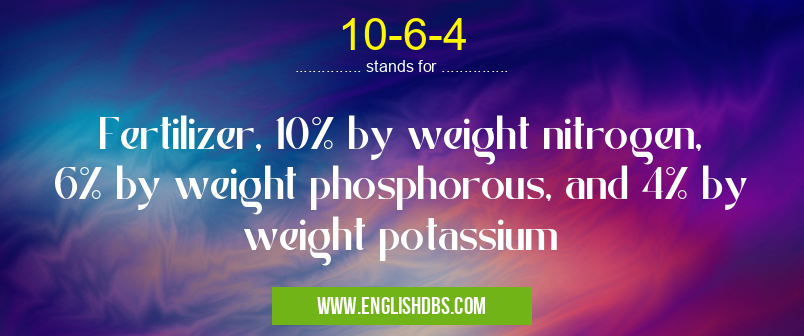
10-6-4 meaning in Farming & Agriculture in Miscellaneous
10-6-4 mostly used in an acronym Farming & Agriculture in Category Miscellaneous that means Fertilizer, 10% by weight nitrogen, 6% by weight phosphorous, and 4% by weight potassium
Shorthand: 10-6-4,
Full Form: Fertilizer, 10% by weight nitrogen, 6% by weight phosphorous, and 4% by weight potassium
For more information of "Fertilizer, 10% by weight nitrogen, 6% by weight phosphorous, and 4% by weight potassium", see the section below.
10-6-4 Meaning in MISCELLANEOUS
In various agricultural and home-care contexts, the 10-6-4 meaning in MISCELLANEOUS categories refers to a specific blend of three essential macronutrients: Nitrogen, Phosphorus, and Potassium. When homeowners ask, "what does 10-6-4 stand for," they are looking for the breakdown of these chemical elements by weight.
The 10-6-4 full form represents the following concentration:
- 10% Nitrogen (N): This is the primary driver for top-growth and greening. Nitrogen is responsible for the lush, vibrant color of grass and the rapid development of foliage.
- 6% Phosphorus (P): This element focuses on the underground health of the plant. It encourages strong root systems and helps in the transition from seed to sprout.
- 4% Potassium (K): Often referred to as "potash," this nutrient acts as a general health booster, improving the plant's ability to resist disease, withstand drought, and survive extreme temperature fluctuations.
The remaining 80% of the product weight usually consists of filler materials, such as sand or granular limestone, which facilitate an even distribution of the active nutrients. Using a fertilizer with this specific ratio is often ideal for established lawns that require a steady boost of greening without an excessive surge in root growth or flowering.
Essential Questions and Answers on Fertilizer, 10% by weight nitrogen, 6% by weight phosphorous, and 4% by weight potassium in "MISCELLANEOUS»FARM"
What is the 10-6-4 meaning in the context of commercial fertilizers?
The 10-6-4 meaning refers to the N-P-K ratio, which identifies the percentage by weight of the three primary macronutrients contained within the bag. This specific sequence indicates that the product consists of 10 percent nitrogen, 6 percent phosphorus, and 4 percent potassium, with the remaining percentage composed of filler materials or micronutrients that assist in delivery.
What is the 10-6-4 full form as recognized by agricultural standards?
The 10-6-4 full form is the standardized chemical shorthand for a mixture containing 10% Nitrogen (N), 6% Phosphorus (P), and 4% Potassium (K). These elements are always listed in this specific order on a fertilizer label to provide a clear and consistent nutrient profile for consumers and professional landscapers.
What does 10-6-4 stand for regarding plant nutrition and health?
On a fertilizer label, 10-6-4 stands for the guaranteed analysis of available nitrogen to promote leaf growth, phosphate to support root development, and soluble potash to enhance overall plant hardiness and disease resistance. The higher nitrogen content makes it particularly effective for plants that require significant vegetative growth and a vibrant green color.
Where and how is 10-6-4 fertilizer most effectively used in a landscape?
This fertilizer blend is commonly used on established lawns, shade trees, and ornamental shrubs that benefit from a steady supply of nitrogen without an overabundance of other minerals. To apply it correctly, a spreader should be used to distribute the granules evenly across the soil surface, followed by a thorough watering session to help the nutrients reach the root zone.
Why is a 10-6-4 ratio often recommended for general turf maintenance?
A 10-6-4 ratio is frequently recommended for general turf maintenance because it provides a balanced yet nitrogen-rich formula that supports the thick growth and deep color desired in residential and commercial lawns. By offering moderate levels of phosphorus and potassium alongside the nitrogen, the fertilizer ensures the grass remains resilient against environmental stressors while maintaining its aesthetic appeal.
Final Words: Mastering the 10-6-4 meaning allows you to move beyond guesswork and approach lawn maintenance with scientific precision. By recognizing what does 10-6-4 stand for, you can better evaluate if your soil's current nutrient levels align with the needs of your landscape. Whether you are a weekend gardener or a professional groundskeeper, knowing the 10-6-4 full form ensures that you are providing a balanced and effective treatment to promote long-term plant vitality. Always perform a soil test before application to confirm that this specific ratio is the perfect match for your environment.
