What does ALE mean in LANGUAGE CODES (3 LETTERS)
Abbreviations often act as linguistic shortcuts, helping us categorize complex cultural, geographical, and linguistic terms into simple three-letter codes. If you have ever come across the acronym ALE while browsing linguistic databases, demographic surveys, or regional maps, you might have wondered: what does ALE stand for? While the term typically brings to mind a popular brewed beverage, in professional, academic, and geographical contexts, the ALE full form carries a much deeper cultural significance. Understanding the ALE meaning helps us appreciate the rich tapestry of indigenous heritages that have shaped our global history.
ALE meaning in Language Codes (3 Letters) in Regional
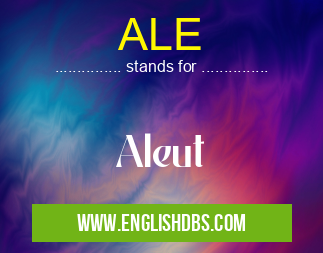
ALE mostly used in an acronym Language Codes (3 Letters) in Category Regional that means Aleut
Shorthand: ALE,
Full Form: Aleut
For more information of "Aleut", see the section below.
ALE Meaning in REGIONAL
When exploring global demographics and indigenous cultures, the ALE meaning in REGIONAL contexts refers directly to the Aleut people and their traditional language. The Aleuts are the indigenous inhabitants of the Aleutian Islands, a volcanic archipelago that stretches across the North Pacific Ocean, bridging the gap between southwestern Alaska and eastern Russia.
To understand this designation better, let us look at some key aspects of what this abbreviation represents in regional and anthropological studies:
- The People: The Aleut (self-named Unangan or Unangas) have inhabited their rugged coastal homeland for thousands of years, developing highly specialized skills in maritime hunting, skin-boat construction, and resilient community building.
- The Language: In international linguistic databases (such as the ISO 639 standard), ALE is the official code used to classify the Aleut language. This language belongs to the Eskimo-Aleut language family and features unique dialectal variations across different island groups.
- Geographical Mapping: In regional administration and anthropological research, the abbreviation is frequently utilized to map out historical territories, native corporation boundaries in Alaska, and cultural preservation initiatives.
Recognizing the ALE full form as Aleut is crucial for researchers, historians, and policymakers who work to preserve indigenous languages and honor the sovereignty of first nations.
Essential Questions and Answers on Aleut in "REGIONAL»LANGUAGES3L"
What does ALE stand for in the context of international language and cultural databases?
In international classification systems, ALE stands for Aleut, which represents the indigenous people of the Aleutian Islands and their native language. This three-letter abbreviation is the officially designated ISO 639-2 and ISO 639-3 code used to identify the Aleut language in global linguistic catalogs.
What is the primary ALE meaning and how does it relate to linguistic classification?
The primary ALE meaning refers to the Aleut language, natively known as Unangam Tunuu, which is a branch of the Eskimo-Aleut language family. In academic research, digital library science, and data archiving, this identifier is used to classify resources, catalog historical texts, and distinguish this unique tongue from other regional polar languages.
What is the ALE full form and where is this linguistic group geographically located?
The ALE full form is Aleut, representing the native population and language traditional to the Aleutian Islands, the Pribilof Islands, the Shumagin Islands, and the westernmost part of the Alaskan Peninsula. A small population of speakers associated with this linguistic group also historically settled on the Commander Islands, which belong to the Russian Federation.
Where and how is ALE used in modern digital infrastructure and educational preservation?
The code ALE is used in global digital systems, search engine indexing, and translation databases to categorize educational materials and localization software. International organizations and native cultural preservation groups utilize this standardized code to ensure that digital dictionaries, language learning applications, and community archives are correctly indexed and accessible to researchers and heritage learners worldwide.
Final Words: In summary, while three-letter abbreviations are frequently used for technical convenience, they often represent vast histories and living cultures. If someone asks you, "what does ALE stand for" in a cultural or geographical discussion, you can confidently explain its connection to the resilient Aleut community. From mapping linguistic heritages to acknowledging indigenous lands, understanding the ALE meaning serves as an important bridge to appreciating regional diversity. Embracing the ALE meaning in REGIONAL frameworks ensures that the heritage of the Unangan people remains recognized and respected in our modern, interconnected world.
ALE also stands for: |
|
| All stands for ALE |
