What does A mean in CERTIFICATIONS & DIPLOMAS
In the modern professional landscape, quality assurance and standardization are crucial for organizational success. If you have run across this abbreviation in corporate or regulatory documents, you might wonder: what does A stand for? In this context, the A full form represents the Assessment and Certification Scheme. This specialized framework is designed to evaluate, validate, and formally certify that an organization, process, or individual meets specific industry standards. Understanding the A meaning is essential for organizations aiming to build trust, ensure compliance, and demonstrate excellence in their operational standards.
A meaning in Certifications & Diplomas in Business
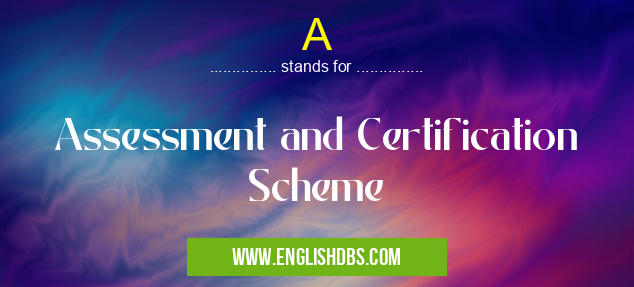
A mostly used in an acronym Certifications & Diplomas in Category Business that means Assessment and Certification Scheme
Shorthand: A,
Full Form: Assessment and Certification Scheme
For more information of "Assessment and Certification Scheme", see the section below.
A Meaning in BUSINESS
When we dive into the corporate world, the A meaning in BUSINESS carries significant weight. It acts as a benchmark for quality and credibility, helping enterprises prove their compliance with international and national guidelines. Implementing an Assessment and Certification Scheme allows companies to systematically audit their workflows, products, or employee skills to secure an official stamp of approval.
Here is how this scheme impacts the corporate ecosystem:
- Quality Assurance: It ensures that products and services consistently meet high-quality benchmarks, reducing errors and boosting customer satisfaction.
- Market Competitiveness: Having a recognized certification gives businesses a distinct competitive edge, making them more attractive to potential clients and partners.
- Risk Mitigation: By aligning operations with the A full form standards, companies can proactively identify and mitigate regulatory, operational, and financial risks.
- Consumer Trust: Ultimately, the A meaning translates to transparency and reliability, reassuring stakeholders that the business adheres to rigorous external evaluations.
Whether it is ISO standards, safety certifications, or specialized industry credentials, grasping what does A stand for in a commercial context helps leaders steer their organizations toward sustainable growth.
Essential Questions and Answers on Assessment and Certification Scheme in "BUSINESS»CERTIFICATES"
What does the acronym A stand for in professional and regulatory contexts?
In professional, educational, and regulatory contexts, A stands for the Assessment and Certification Scheme, which serves as a formal system for validating compliance, quality, and competence.
What is the full form and meaning of this scheme?
The full form of A is the Assessment and Certification Scheme, which refers to a structured program designed to systematically evaluate, test, and officially certify that an individual, organization, process, or product meets predetermined industry benchmarks.
Where and how is the Assessment and Certification Scheme utilized in practice?
The Assessment and Certification Scheme is primarily utilized in vocational education, corporate quality assurance, and international trade to assess technical skills, audit manufacturing processes, and issue formal credentials that verify compliance with global safety and operational standards.
What value does the Assessment and Certification Scheme provide to stakeholders?
The Assessment and Certification Scheme delivers significant value by establishing reliable quality benchmarks, reducing operational risks for businesses, and providing consumers and employers with objective, verifiable proof of high-quality standards and professional expertise.
Final Words: Navigating the complexities of corporate compliance becomes much simpler when you understand foundational frameworks like the Assessment and Certification Scheme. From enhancing brand reputation to ensuring strict regulatory alignment, the A meaning in BUSINESS highlights the undeniable value of standardized evaluations. By embracing the principles behind this framework, organizations can foster a culture of continuous improvement and achieve long-term success.
A also stands for: |
|
| All stands for A |
